
Navigating Copenhagen for Pokémon GO Fest 2026: Transportation Guide for Trainers

Attending Pokémon GO Fest 2026 at Fælledparken in Østerbro? Whether you’re a local trainer or traveling from abroad, getting around Copenhagen efficiently is key to maximizing your time catching Pokémon, participating in raids, and collecting gifts. Here’s a comprehensive guide to public transportation, bikes, scooters, taxis, and even cross-border options.
Understanding Copenhagen’s Neighborhoods
Østerbro: This is where Fælledparken is located — a green, spacious area perfect for GO Fest activities. Østerbro is calm, leafy, and packed with cafés and restaurants, making it ideal for post-event meals.
Indre By (City Center): The heart of Copenhagen, full of shops, restaurants, and cultural landmarks. Perfect for trainers who want to explore PokéStops, Gyms, and Pokémon spawns outside the event area.
Nørrebro, Vesterbro, and Frederiksberg: Trendy neighborhoods with lots of PokéStops, cafés, and street art. Great for side quests or spinning stops while hopping between raids.
Getting Around: Copenhagen is compact, and public transportation links neighborhoods seamlessly. For Pokémon GO players, combining walking with public transit is often the fastest way to maximize both your catching and your event participation.
Public Transportation Options
Metro - These goes to Trianglen, Fælledparken - 1A & 14
Copenhagen’s metro is driverless, punctual, and runs 24/7 on weekends. The nearest stations to Fælledparken are Østerport and Trianglen, both a short walk from the park. Metro trains are great for avoiding traffic and getting quickly between districts.
Buses - These goes to Trianglen, Fælledparken - M3 & M4
Copenhagen’s bus network covers the entire city and complements the metro, reaching areas that the trains do not. While some lines stop near Østerbro, it’s best to check real-time routes for your specific start and end points. Use DOT or Rejseplanen, which are fully integrated into Google Maps, so you can plan your route quickly and see exact schedules, stops, and walking distances.
Tip for Pokémon GO players: Buses are great for moving between neighborhoods, but always double-check which line actually stops near Fælledparken or your intended Gyms. Combining buses with walking or cycling can save you time and maximize your gameplay.
S-trains - These goes to Østerport, Nordhavn - A, B, Bx, C, E, (H only Østerport)
S-trains & Regionals connect Copenhagen with suburbs and nearby cities like Malmö in Sweden. If you’re coming from Malmö, taking the train via Øresund Bridge is convenient — it also allows budget-conscious travelers to fly into Malmö Airport and then take public transit to Copenhagen.
Bicycles
Copenhagen is a cycling city. You can rent bikes almost anywhere through:
-
Bycyklen (city rental bikes, app or kiosk-based)
-
Donkey Republic (dockless rental bikes, app-based)
-
Private shops - There is one at Østerport
Biking is perfect for reaching multiple PokéStops or Gyms quickly and avoids the constraints of crowded public transport.
Electric Scooters
E-scooters are widely available and can be rented via apps like Lime or VOI. They’re fast for short distances and especially handy for connecting between parks, cafés, or evening events.
Taxis
Taxis are easy to find in busy areas or can be booked through apps. They’re a good fallback if you need to travel late at night or carry Pokémon GO gear after a full day of events.
Walking
Copenhagen is extremely walkable. Many PokéStops, Gyms, and spawn points are within short distances of each other in Fælledparken, Østerbro, and the city center. Walking also gives you the chance to hatch eggs efficiently while exploring the city.
Cross-Border Travel: Sweden
If flights to Copenhagen are expensive, consider flying into Malmö Airport in Sweden. From there, it’s easy to:
-
Take the train across the Øresund Bridge to Copenhagen Central Station (about 35 minutes)
-
Use buses or local transit to reach Østerbro and Fælledparken
This can save money on airfare while still giving you easy access to all GO Fest activities.
Tips for Pokémon GO Players
-
Plan your route: Use a combination of walking, biking, and public transport to maximize stops, raids, and event spawns.
-
Start early: Morning trains, metro, and buses can be less crowded, giving you a smoother journey to the park.
-
Coordinate with friends: Meeting up with other trainers in central hubs or along routes can help you take down raids efficiently.
-
Watch your surroundings: Copenhagen is very bike-friendly, but always be aware of traffic when spinning PokéStops or crossing streets.
Transport Prices in Copenhagen
If you’re traveling to Pokémon GO Fest in Fælledparken, understanding ticket options ahead of time can save you both money and frustration. Copenhagen’s public transport is zone-based, but the good news is that one ticket works across metro, buses, and trains, making it easy to move between raids, spawns, and meetup locations.
City Pass — The Easiest Choice for Trainers
For most visitors, the City Pass is the simplest option because it gives unlimited travel within the selected zones for the duration of the pass.
-
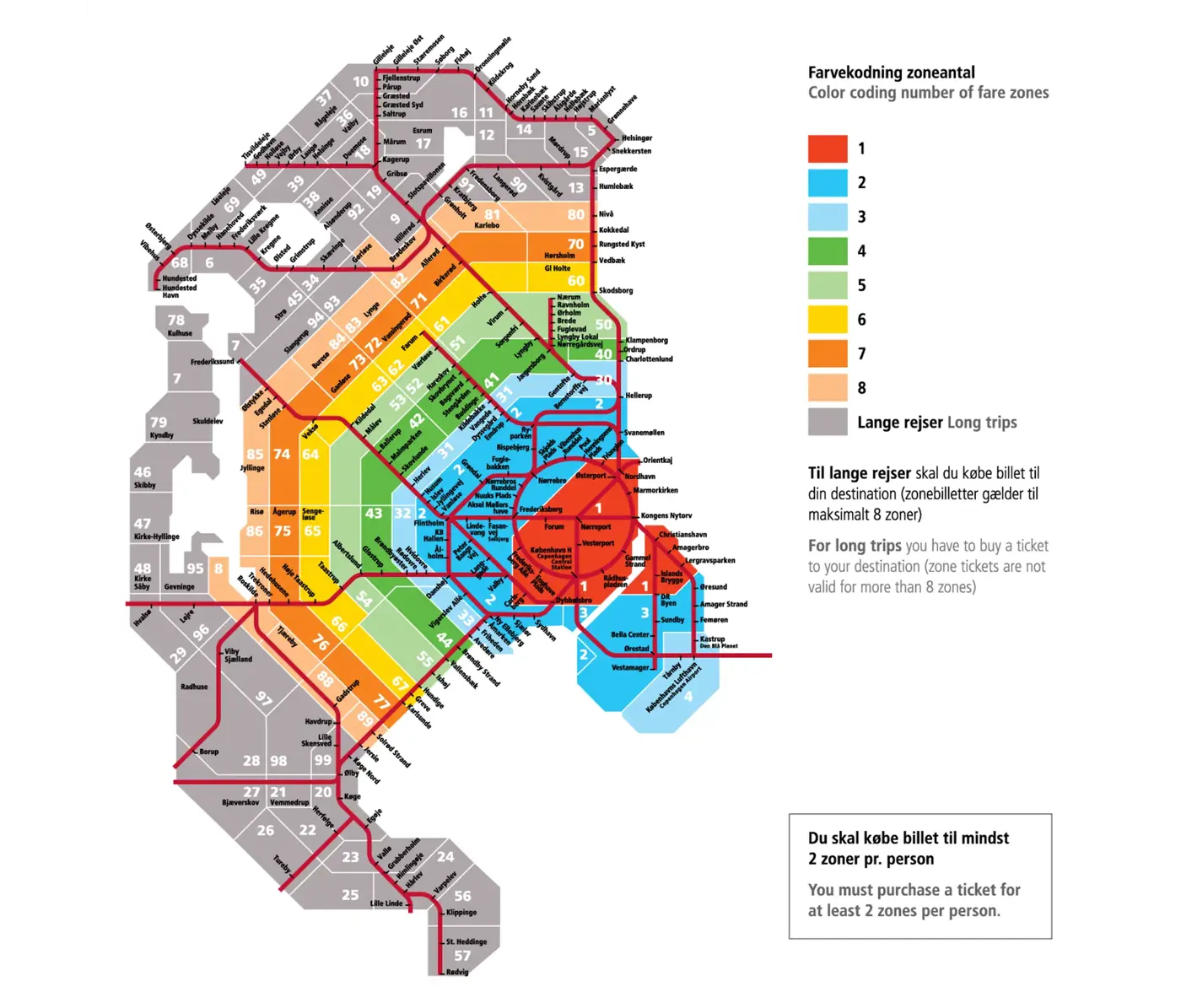
City Pass Small (zones 1–4): Covers central Copenhagen, including downtown and Østerbro. - Go to zone map.
-
City Pass Large (zones 1–99): Includes the wider region such as Roskilde, Hillerød, and Malmö Airport connections.- Go to zone map.
Prices (adult):
-
24 hours — about DKK 80 (Small) / DKK 160 (Large)
-
48 hours — about DKK 150 / 300
-
72 hours — about DKK 200 / 400
-
96 hours — about DKK 250 / 500
-
120 hours (5 days) — about DKK 300 / 600
There isn’t currently an official 7-day City Pass — most GO Fest travelers combine a 5-day pass with single tickets if staying longer.
Why this matters for GO Fest:
Unlimited travel means you can chase raids across the city without worrying about tapping in or calculating zones every time.
Rejsekort — Best for Longer Stays
The Rejsekort is Denmark’s rechargeable travel card, similar to London’s Oyster.
You simply check in at the start of your journey and check out when finished, and the fare is calculated based on distance.
Good to know:
-
Works on buses, trains, and metro.
-
Prepaid balance with optional auto-top-up.
When to choose it:
If you’re staying a week or more — or planning trips outside Copenhagen — it can be cheaper than multiple short passes.
Bringing a Bike on Public Transport
Cycling is a huge part of Copenhagen culture, and many trainers combine biking with transit to move quickly between clusters.
-
Bikes are allowed on metro, harbour buses, and commuter trains.
-
On some services (like S-buses), a bicycle fee applies — historically around DKK 12.
Tip for GO Fest:
Ride between nearby raid locations, then jump on the metro when the next legendary pops across town.
Zone Basics (Don’t Overthink It)
Copenhagen is divided into fare zones, with zones 1–3 forming the city core where most visitors spend their time.
If your hotel is central, you’ll rarely need more than the small zone coverage.
Also note:
-
Tickets are valid across bus, train, and metro.
-
Traveling without a valid ticket can result in a 750 DKK fine, so always check in properly. They check everything quite offen.
Quick Recommendation for GO Fest Trainers
Staying 3–5 days:
→ Get a City Pass Small.
Staying a week or exploring beyond the city:
→ Consider a Rejsekort.
Planning heavy raid movement:
→ Unlimited travel is worth it.
The less time you spend thinking about tickets, the more time you spend catching shinies.
Join us at Campfire
Relateret indhold
 Guide til Dynamax og Gigantamax i Pokémon GO
 Søg og find Pokémons i Pokémon GO
 Hvad er Friends (venner) i Pokémon GO og hvordan søger du i dem
 Where to Eat on Østerbro During Pokémon GO Fest 2026 (Fælledparken, Copenhagen)
 Pokémon GO Fest 2026 Copenhagen — Tickets, Dates, and How to Buy
 Early bird Pokémon GO Fest 2026-billetter kommer 04/03-2026